
Table of Contents
- What Is American Heritage Clothing?
- Craftsmanship and Construction Quality That Lasts
- The Best Durable Patriotic Shirts for Men: What to Look For
- Benefits of Buying American Made Clothing: Local Economy and Ethical Manufacturing
- Cost-Per-Wear: Why Heritage Pieces Beat Fast Fashion
- Caring for American Heritage Clothing: Maintenance and Repairability
- Styling Heritage Apparel for Modern Professional Environments
- Pros and Cons of Wearing American Heritage Clothing
- Frequently Asked Questions
Last Updated: September 26, 2026
What Is American Heritage Clothing?
American heritage clothing is apparel built on durable construction, domestic manufacturing, and designs that stay in style for decades rather than seasons. At Bargainoutlet.store, we see the difference up close: heavyweight cotton, reinforced stitching, and fits that don't chase trends. This guide covers the real benefits of wearing American heritage clothing, from cost-per-wear math to fabric science.
The category traces back to workwear: denim, canvas, flannel, and knit tees made to survive jobsites, not runways. Those garments earned a patina over time instead of falling apart. That's the core contrast with fast fashion, which optimizes for low upfront cost and short life.
A common mistake is assuming "heritage" just means vintage-looking. It doesn't. Heritage is a construction standard. A shirt earns the label through fabric weight, seam quality, and where and how it's made.
Craftsmanship and Construction Quality That Lasts
Craftsmanship is where heritage apparel separates itself. Look at three things: fabric weight, stitch density, and seam reinforcement. A heavyweight cotton tee holds its shape through repeated washing, while thin fabric pills and stretches within months.
Construction quality shows up in details most shoppers ignore. Double-stitched hems, taped shoulder seams, and side-seamed bodies all resist twisting. Ring-spun cotton feels softer and prints more cleanly than carded cotton, which is why it dominates quality graphic tees.
Durability isn't marketing language. It's measurable. Garments with higher fabric weight and tighter stitching simply survive more wash cycles. That's the practical difference between a shirt you replace yearly and one you keep for a decade.
Federal Trade Commission guidance on textile labeling and care sets the disclosure standards manufacturers follow, so you can verify fiber content before buying.
The Best Durable Patriotic Shirts for Men: What to Look For
The best durable patriotic shirts for men share a specific profile: heavyweight cotton or a cotton-poly blend, reinforced seams, and screen printing that won't crack after a few washes. Fit matters too. A shirt cut for real shoulders and torsos wears better than a boxy one-size print.
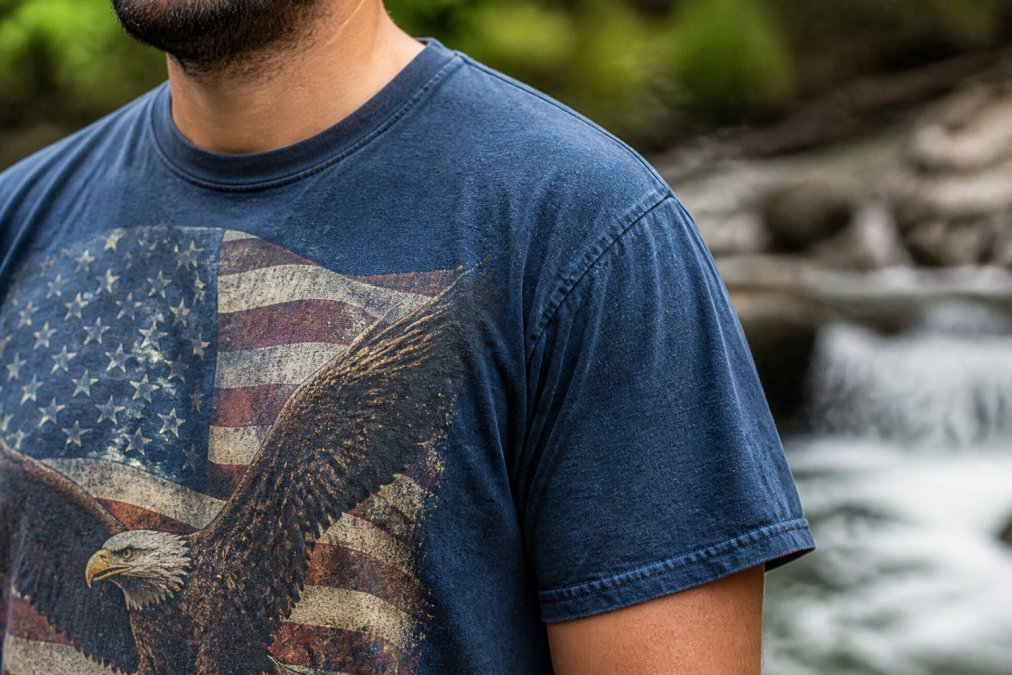
Here's a quick checklist before you buy:
- Fabric weight listed (heavier generally lasts longer)
- Double-stitched hems and taped shoulders
- Side-seamed body to prevent twisting
- Print method stated (screen print or DTG)
- Domestic manufacturing disclosed
- Care instructions included
Benefits of Buying American Made Clothing: Local Economy and Ethical Manufacturing
Buying American made clothing keeps money circulating through domestic mills, cut-and-sew shops, and small businesses. That supports local jobs and shortens the supply chain, which makes working conditions easier to verify. Supply chain transparency is a real advantage when you can trace a garment's origin.
Ethical manufacturing and domestic production often go together. Shorter supply chains mean fewer layers between the maker and the buyer, and that accountability tends to show up in construction quality. You're not just buying a shirt. You're backing a system that values the people who make it.
For shoppers who care about where their money lands, this is the practical case for American made apparel. It's not abstract patriotism. It's a supply-chain decision with visible results.
Cost-Per-Wear: Why Heritage Pieces Beat Fast Fashion
Cost-per-wear is the number that actually matters, and it is simple arithmetic: divide the purchase price by the number of times you wear the garment. A low sticker price means nothing if the shirt only survives a season.
Run the math on a typical comparison. A mass-market graphic tee priced in the low teens and worn about once a week may fade, pill, or lose its shape within a year, which works out to roughly a dollar per wear. A heavyweight heritage tee that costs several times more but stays in rotation for five years at the same weekly cadence lands in the range of a few cents per wear. The exact figures depend on your price point and how often you reach for the piece, but the direction of the curve is consistent: the longer a garment stays wearable, the lower its cost-per-wear falls.
The mechanism behind that gap is fabric weight and construction, not branding. Heavier cotton knits resist thinning at the elbows and collar, side-seamed bodies resist torque twisting in the wash, and taped shoulder seams keep their shape through repeated cycles. Lighter fast-fashion knits use less fiber, so every wash removes a little more of the structure that holds the garment together.
| Factor | Fast Fashion | Heritage Clothing |
|---|---|---|
| Upfront cost | Lower | Higher |
| Typical lifespan | Months | Years |
| Cost-per-wear | High over time | Low over time |
| Repairability | Rarely | Often |
| Style longevity | Trend-driven | Timeless |
Repairability is the hidden multiplier. A loose seam, a dropped hem, or a small hole in a heavyweight knit can be mended with a needle and thread or a few dollars at a tailor, which resets the wear clock. Thin fast-fashion fabric often cannot hold a repair because the yarn itself is too weak, so the garment is effectively disposable once it fails.
Slow fashion reframes the purchase as an investment in wardrobe staples rather than a recurring expense. You buy fewer pieces, replace them less often, and the cost-per-wear line keeps dropping the longer you own them. That is the practical case for heritage construction, and it holds up whether you are buying one tee or rebuilding a whole drawer.
Caring for American Heritage Clothing: Maintenance and Repairability
Most articles explain why heritage clothing lasts and stop there. The how is where the real advantage lives, because a heavyweight tee or raw denim jacket treated correctly can outlast its owner's interest in it.
Start with fabric-specific care. Heavyweight cotton knits do best washed cold and inside out, then hung or laid flat to dry; the dryer's heat is what breaks down the yarn structure and shrinks the body. Raw or rigid denim should be washed sparingly and cold, inside out, and hung to dry to preserve the indigo and the fabric's stiffness. Vegetable-tanned leather does not go in a washing machine at all: wipe it with a damp cloth, condition it lightly once or twice a year, and let it darken naturally. Wool flannel and heavy canvas follow the same principle as denim: cold, gentle, air-dried.
Repair is the quiet superpower of heritage construction. A dropped hem on a heavyweight tee can be re-stitched by hand in a few minutes.
Styling Heritage Apparel for Modern Professional Environments
Heritage apparel works in professional settings when you style it deliberately. Pair a heavyweight tee with a blazer and chinos for a smart-casual look. Layer a flannel or henley under a jacket for cooler months. Minimalist design keeps the outfit clean.
Pros and Cons of Wearing American Heritage Clothing
Heritage clothing isn't the right call for everyone, and it's worth being honest about the trade-offs.
Pros:
- Superior durability and construction quality
- Lower cost-per-wear over time
- Supports domestic jobs and ethical manufacturing
- Timeless aesthetic that resists trend cycles
- Repairable and built to develop patina
Cons:
- Higher upfront cost than fast fashion
- Smaller selection and fewer trendy options
- Requires more careful care and maintenance
- Domestic sourcing can limit availability
Frequently Asked Questions
What is American heritage style?
American heritage style draws from utilitarian workwear, military gear, and classic menswear made to last. It favors natural fibers like cotton and wool, sturdy construction such as reinforced stitching, and timeless designs instead of fast fashion trends. Think selvedge denim, waxed canvas jackets, and heavyweight flannels. This aesthetic values function first, so pieces stay wearable for decades. Brands that follow this approach often document their supply chain and offer repairs, which keeps garments out of landfills and builds a legacy wardrobe.
Why is American-made clothing considered more durable?
American-made clothing often uses heavier-weight fabrics and reinforced construction methods like double-stitched seams, bar-tacked stress points, and high-quality hardware. Manufacturers may prioritize longevity to justify higher production costs, so they choose materials that resist wear. For example, a 12-ounce cotton tee holds its shape longer than a thin 5-ounce import. Domestic factories also face stricter labor and safety rules, which tends to correlate with better quality control. The result is a garment that survives hundreds of washes, making it a better long-term investment.
Does heritage clothing offer better long-term value than fast fashion?
Yes. Fast fashion pieces often cost less upfront but wear out quickly, leading to repeated replacements. A heritage garment may cost more initially, but its durability means you replace it far less often. For instance, a well-made shirt that lasts five years and costs $80 works out to $16 per year, while a $20 shirt replaced every year costs $20 annually. Over time, the heritage option saves money and reduces waste, especially when you factor in repairability and timeless style that never goes out of season.
How does wearing heritage apparel support local manufacturing?
Buying heritage apparel made domestically keeps manufacturing jobs in the United States and supports small businesses, from cotton farmers to sewing machine operators. It also shortens supply chains, which can reduce carbon emissions and make working conditions more transparent. When you choose brands that produce locally, you help sustain skilled trades and invest in your community's economic resilience. Many heritage companies also give back to veterans' organizations, so your purchase supports causes beyond the factory floor.