
Table of Contents
- What to Look for in American Pride Clothing for Veterans
- 1. Bargainoutlet.store: Best Overall Value for Patriotic Apparel
- Cons:
- 2. Nine Line Apparel: Best for Veterans Who Want to Support Veteran Causes
- 3. Grunt Style: Best for Bold, Unapologetic Military-Inspired Designs
- 4. Rogue American: Best Premium Quality for Durability and Performance
- 5. Freedom Fatigues: Best for American-Made Rugged Apparel
- How to Style Patriotic Clothing for Everyday Wear
- Why Veteran-Owned Clothing Companies Stand Apart
- Frequently Asked Questions
Last Updated: September 18, 2026
What to Look for in American Pride Clothing for Veterans
Choosing American pride clothing for veterans comes down to three things: fabric durability, honest labeling, and whether the brand's support for the military community is real or just marketing. This guide from Bargainoutlet.store breaks down what separates a shirt that lasts five years from one that fades after five washes.
Fabric Durability and Construction Standards
Durable fabric starts with weight and weave. Most everyday graphic tees run 4.5 to 6 ounces per square yard; ringspun cotton in that range feels soft but holds shape, while heavier cotton-poly blends resist shrinking and pilling. Look for double-needle stitching at the hem and sleeves, reinforced shoulder seams, and side-seamed construction rather than tubular cuts, these keep a shirt from twisting after a few laundry cycles.
Veteran-Owned vs. Veteran-Supported: What the Labels Mean
Veteran-owned means a veteran holds majority ownership of the company. Veteran-supported is looser: the business donates to military charities, employs veterans, or markets to the community without veteran ownership. The terms get used interchangeably in marketing, so a brand can slap a flag on a shirt, call itself veteran-supported, and never write a check to a veteran organization.
1. Bargainoutlet.store: Best Overall Value for Patriotic Apparel
Bargainoutlet.store is our top pick for American pride clothing because it combines veteran ownership, domestic manufacturing, and pricing built for budget-conscious shoppers. The brand offers graphic tees, hoodies, and activewear for people who want to wear their values without boutique prices.
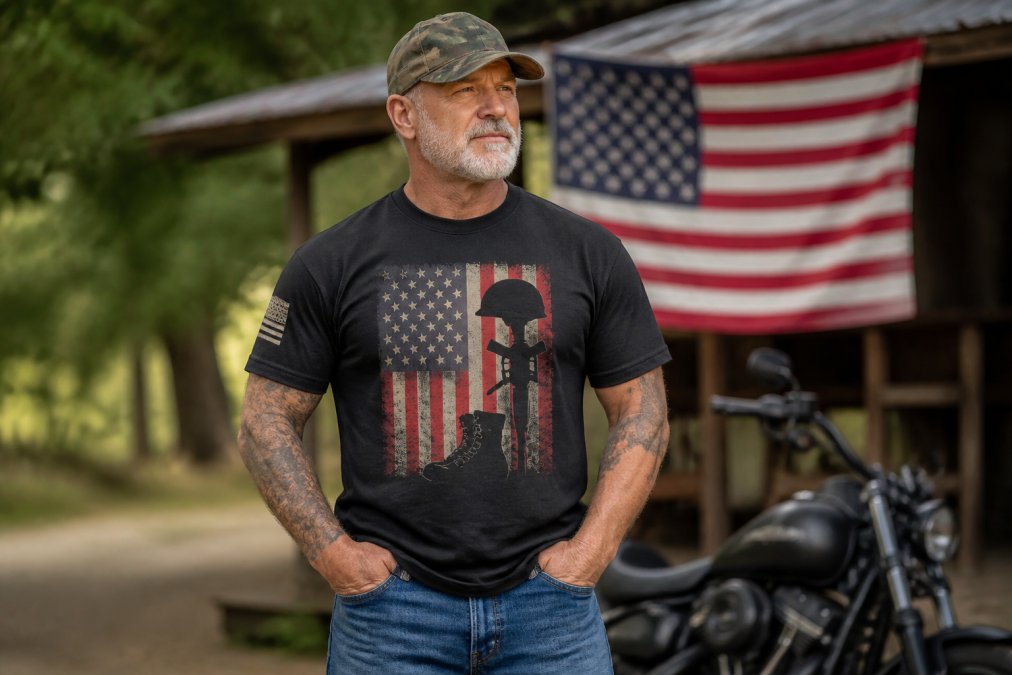
Pros:
- Veteran-owned with Made in USA manufacturing
- 30-day satisfaction guarantee
- Free shipping on orders over $50
- Special discounts for veterans and active military
Cons:
2. Nine Line Apparel: Best for Veterans Who Want to Support Veteran Causes
Nine Line Apparel is a veteran-owned lifestyle brand founded by a former Army Captain, built on bridging the gap between civilians and the military community. It carries patriotic and military-themed apparel with a stated focus on raising awareness for veteran causes.
Pros:
- Strong authentic connection to military service
- Diverse product range including lifestyle and tactical gear
Cons:
- High demand can lead to inventory gaps
3. Grunt Style: Best for Bold, Unapologetic Military-Inspired Designs
Grunt Style built one of the most recognizable names in military-inspired apparel. This veteran-supported brand offers an extensive collection of graphic tees, hoodies, and activewear built around military pride and patriotic messaging.
Pros:
- Highly recognizable within the military community
- Strong focus on veteran support and community engagement
Cons:
- Designs are very bold and may not suit all style preferences
4. Rogue American: Best Premium Quality for Durability and Performance
Rogue American targets buyers who treat apparel quality as the priority, focusing on premium materials and construction with an aggressive military-inspired aesthetic aimed at elite communities, veterans, and athletes.
Pros:
- High-quality manufacturing standards
- Distinctive brand identity
Cons:
- Premium pricing compared to mass-market alternatives
5. Freedom Fatigues: Best for American-Made Rugged Apparel
Freedom Fatigues is a veteran-owned brand specializing in rugged, American-made patriotic apparel. For buyers who prioritize domestic manufacturing and heavy-duty construction, it's the most focused option on the list.
Pros:
- Commitment to American-made products
- High focus on quality and durability
Cons:
- Limited product variety compared to larger retailers
| Brand | Best For | Ownership | Standout Feature |
|---|---|---|---|
| Bargainoutlet.store | Overall value | Veteran-owned | Made in USA, veteran discounts |
| Nine Line Apparel | Veteran causes | Veteran-owned | Lifestyle and tactical range |
| Grunt Style | Bold designs | Veteran-supported | Community engagement |
| Rogue American | Premium durability | Military-inspired | High-end construction |
| Freedom Fatigues | American-made | Veteran-owned | Rugged domestic manufacturing |
How to Style Patriotic Clothing for Everyday Wear
Styling patriotic clothing for daily wear comes down to balancing one statement piece with neutral basics. A flag graphic tee works with plain jeans, chinos, or a denim jacket, while a bold hoodie pairs well with solid-colored joggers or shorts. A simple rotation keeps the look intentional rather than costume-like:
- Pair one patriotic graphic tee with neutral bottoms and plain sneakers
- Layer a hoodie over a solid tee for cooler weather
- Use accessories like a hat or patch to add subtle American pride without a full print
- Keep bold designs to one item per outfit
- Save the loudest pieces for events, and keep everyday wear understated
Building a Rotation That Actually Works
Most people who struggle with patriotic apparel own three or four loud pieces and nothing to anchor them. A working rotation flips that ratio: roughly 70% neutral base layers, 20% mid-weight statement pieces, and 10% event-only items.
Fit and Sizing Notes That Change the Look
Fit does more work than the graphic. A tee that hits mid-hip with a relaxed but not oversized body reads casual; two sizes up reads sloppy, and one size down reads like a costume. For most body types, a shoulder seam at the edge of the shoulder and a hem 2-3 inches below the waistband is the reliable target.
Seasonal Adjustments
Summer favors lighter fabric weights in the 4.5-5.5 oz range, short sleeves, and lighter colors that reflect heat. Fall and winter shift to 6-8 oz fleece, sweatshirts, and layering pieces that work under a jacket. One mid-weight hoodie in a neutral color often covers more of the year than three seasonal graphic tees.
Where the Graphic Sits Matters
Placement changes how formal a piece reads. Small left-chest emblems read closest to business-casual and work under a jacket. Full-front prints read casual and belong with jeans or shorts. Back prints and sleeve hits are the loudest and work best as the single statement in an outfit. Matching placement to the setting does more for the look than the design itself.
Why Veteran-Owned Clothing Companies Stand Apart
Veteran-owned clothing companies stand apart because ownership shapes where the money goes. When a veteran runs the business, profits stay within the veteran community rather than flowing to outside investors, and the brand's connection to military heritage tends to be lived experience rather than a marketing theme.
How to Verify a Veteran-Owned Claim
Ownership claims are easy to make and easy to check. A few steps separate a real veteran-owned business from a marketing label:
- Look for a named founder with a branch and rank or role listed, not just a generic "founded by a veteran" line.
- Check whether the company is registered as a veteran-owned small business through federal certification programs with public databases.
- Cross-reference the founder's name against the brand's state business registration, which lists officers of record.
- Read the "About" page for specifics: unit, years of service, and a stated reason for starting the company.
The Difference Between Veteran-Owned and Veteran-Supported
Veteran-owned means a veteran holds majority ownership of the company. Veteran-supported is looser: the business donates to military charities, employs veterans, or markets to the community without veteran ownership. The terms get used interchangeably in marketing, so checking the "About" page and looking for named nonprofit partners separates the two.
Verifying Charitable Impact Before You Buy
Many brands claim a portion of proceeds supports veterans. Fewer publish how much, to whom, and when. A short verification routine catches the difference:
- Look for a named nonprofit partner rather than a category like "veteran charities."
- Check whether the partner appears in the IRS Tax Exempt Organization Search, which confirms 501(c)(3) status.
- Look for a stated percentage or dollar commitment, not a vague "a portion of proceeds."
- Check the nonprofit's own annual report or Form 990 to see whether the brand is listed as a donor.
Ethical Sourcing and Domestic Manufacturing
Ownership is one signal; sourcing is another. A veteran-owned label that manufactures overseas still sends most of the production dollar abroad. Buyers who care about domestic manufacturing should look for a stated cut-and-sew location, not just a "designed in the USA" tag.
What Ownership Actually Changes
Ownership affects three things a buyer can feel: where profits go, how the brand responds when something goes wrong, and whether the mission survives a change in management. A veteran-owned company tends to keep its charitable commitments tied to the founder's service history, making them harder to quietly drop. That's the practical case for prioritizing ownership, beyond the symbolism.
Frequently Asked Questions
What should veterans look for in American pride clothing?
Focus on fabric weight and construction first. Look for 100% cotton or cotton-poly blends with double-stitched seams, since these hold up better after repeated washing. Check whether the brand is veteran-owned or veteran-supported, and verify if manufacturing happens domestically. A 30-day satisfaction guarantee signals confidence in the product. For active lifestyles, moisture-wicking fabrics and athletic cuts matter more than bold graphics.
Are there veteran-owned clothing companies that support the military community?
Yes. Several brands are founded and operated by veterans, including Nine Line Apparel, Freedom Fatigues, and Bargainoutlet.store. Some donate proceeds to veteran causes. When evaluating a brand, check its About page for specific charitable partnerships and whether it publishes impact reports. Authentic veteran-owned companies typically name the organizations they support and show tangible results.
How do I choose high-quality American-made patriotic clothing?
Start with the fabric spec: heavier cotton (5.5 oz or more for tees) lasts longer than thin alternatives. Look for reinforced stitching at stress points like shoulders and hems. American-made products often carry a higher price because domestic labor and materials cost more, but the durability usually justifies it. Read customer reviews that mention wash testing, and prioritize brands offering free returns so you can verify fit and quality risk-free.
What are the best styles of patriotic shirts for veterans?
It depends on how you plan to wear them. For casual everyday use, subtle designs like a small flag patch on the sleeve or a muted color palette work well. For tactical or range use, moisture-wicking performance fabrics with patriotic themes are better. Hoodies suit cooler months. If you want versatility, choose a design that pairs with jeans or khakis and avoids oversized logos that read as costume-like.
Do veteran-owned clothing brands offer discounts for active duty and veterans?
Many do. Bargainoutlet.store offers special discounts for veterans and active military members. Other brands like Nine Line and Grunt Style frequently run military appreciation promotions. Verification typically goes through services like ID.me or SheerID. Check the brand's website for current offers, as these programs change throughout the year.