
Table of Contents
- Why Proper Patriot Graphic Tees Peel (And What to Look For Instead)
- Durable T-Shirt Printing Methods: What Actually Holds Up
- Screen Printing vs Heat Transfer: Which Print Lasts Longer?
- How to Wash Graphic Tees So the Print Survives
- Fabric Quality and Fit: What Separates Premium from Disposable
- Proper Patriot Alternatives Compared: Price, Durability, and Value
- How to Check Print Quality Before You Buy
- Frequently Asked Questions
Last Updated: October 17, 2026
Why Proper Patriot Graphic Tees Peel (And What to Look For Instead)
If you're searching for alternatives to Proper Patriot for graphic tees that won't peel, the short answer is this: peeling almost always traces back to how the print was applied and how the shirt was washed, not to the design itself. At Bargainoutlet.store, we've watched shoppers return to this question again and again after a favorite tee cracked within months.
Print durability is the ability of a printed graphic to stay bonded to fabric through repeated washing, drying, and wear without cracking, fading, or lifting at the edges. The failure usually starts small: a hairline crack at the center of the design, then flaking along the shoulders where the shirt flexes most.
Here's what most guides get wrong. They blame the brand and stop there. In practice, three things drive peeling:
- Ink-to-fiber bond: prints applied to tightly woven, low-quality cotton struggle to grip.
- Print method: some methods sit on top of the fabric rather than soaking in.
- Wash routine: hot water and high-heat drying break down adhesives fast.
Below, we'll show you exactly what separates a print that survives two years from one that fails by June, plus how to check quality before you spend a cent.
Durable T-Shirt Printing Methods: What Actually Holds Up
Screen printing is the most durable method for cotton graphic tees because thick ink is pushed through a mesh screen and cured directly into the fabric fibers. The result is a print that flexes with the shirt instead of sitting on top of it.
Compare that to direct-to-garment printing, which sprays water-based ink onto the surface. DTG shines for detailed, full-color artwork, but on dark or heavyweight cotton it often needs a pretreatment layer, and that layer is where peeling tends to begin.
Heat-transfer vinyl rounds out the trio. It's fast and cheap, which is why budget shirts lean on it, but vinyl is essentially a plastic film heat-pressed onto fabric. It has the shortest lifespan of the three under repeated washing.
What most shoppers miss is that the method isn't printed on the label. You have to look for clues: a soft, slightly textured feel suggests screen printing, while a smooth, rubbery surface that lifts slightly at the edge points to vinyl.
Screen Printing vs Heat Transfer: Which Print Lasts Longer?
Screen printing outlasts heat transfer by a wide margin for everyday wear, because cured plastisol ink bonds into the cotton rather than resting on it. Heat transfer wins only on speed and cost, and it shows that weakness first at the collar and shoulder seams where fabric stretches.
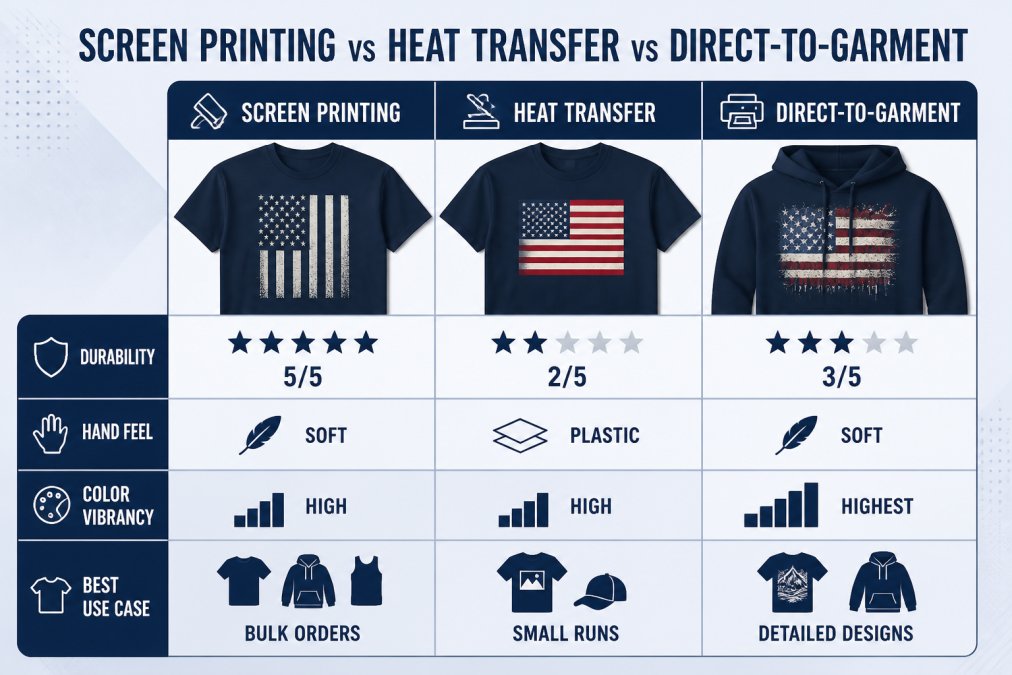
Here's the practical breakdown:
| Method | Durability | Hand Feel | Best For |
|---|---|---|---|
| Screen printing | Highest | Soft after first wash | Bold graphics, everyday wear |
| Direct-to-garment | Moderate | Soft | Detailed, multi-color art |
| Heat transfer vinyl | Lowest | Slightly stiff | Small runs, simple logos |
If longevity is your priority, screen printing is the safer bet every time. The catch is that screen printing costs more to set up, which is exactly why cheap shirts skip it.
How to Wash Graphic Tees So the Print Survives
Washing graphic tees inside out in cold water and air drying them is the single most effective routine for extending print life. Heat is the enemy, and both hot water and a hot dryer accelerate cracking. Most care guides stop there. What they miss is a realistic expectation for how many wash cycles a print should survive, and a clear distinction between print durability and fabric fading.
Follow this checklist:
- Turn the shirt inside out before washing
- Use cold water on a gentle cycle
- Skip fabric softener, which coats fibers and weakens adhesion
- Air dry when possible, or tumble on low heat
- Avoid ironing directly over the print
Cold-water washing keeps the ink flexible. Most practitioners find that water in the cold setting on a residential machine, typically around 60 to 80 degrees Fahrenheit, is sufficient for everyday cleaning without stressing the print. Inside-out washing reduces abrasion against other garments. Air drying removes the heat cycle entirely.
A common mistake is tossing graphic tees in with towels. The lint and friction wear down the print faster than anything else in your laundry room. Wash graphic tees with similar lightweight fabrics, not with denim, towels, or items with zippers and hardware.
Realistic durability expectations. A properly cured screen print on a heavyweight ring-spun cotton tee, washed inside out in cold water and air dried, is commonly expected to hold up through dozens of wash cycles without peeling. Direct-to-garment prints often show some softening and slight fading sooner, while heat-transfer vinyl is the most likely to lift at the edges first.
Print durability vs fabric fading. These are two different failure modes. Print durability is about adhesion and cracking. Fabric fading, shrinkage, and pilling are about the garment itself. A shirt can have a perfectly intact print on a faded, shrunken body. Judge each separately, and use the care label as your guide for both.
Fabric Quality and Fit: What Separates Premium from Disposable
Ring-spun cotton is the clearest marker of a premium tee because the fibers are spun and twisted repeatedly, producing a softer, stronger yarn that holds ink better than standard open-end cotton. Fabric weight, usually measured in ounces per square yard, tells you how substantial the shirt feels and how well it resists shrinkage.
A heavyweight cotton tee in the 6-ounce range holds its shape and supports a print far better than a thin, lightweight blank. Thin fabric stretches under the ink, and that stretch is what cracks a design over time.
Garment construction matters too. Look for double-stitched hems, taped neck seams, and side seams that don't twist after washing. These details separate a shirt built to last from disposable fashion.
Fit and sizing are where premium shirts often stumble. A great print on a boxy, short-cut tee still gets returned. Check the size chart against a shirt you already love before ordering.
Fabric weight and ring-spun cotton are the two quality signals you can verify before buying. If a listing doesn't state either, that silence is your answer.
Proper Patriot Alternatives Compared: Price, Durability, and Value
When comparing alternatives to Proper Patriot, the honest answer is that value depends on print method, fabric weight, and care, not on the logo on the tag. Most roundups of premium graphic tees stop at brand names and star ratings.
Here is the comparison framework we recommend, and the questions to ask each seller:
| Factor | What to Check | Why It Matters |
|---|---|---|
| Print method | Screen print vs DTG vs DTF vs vinyl | Determines peel risk and hand feel |
| Fabric weight | Ounces per square yard (6 oz is a common heavyweight benchmark) | Affects print support and shrinkage |
| Cotton type | Ring-spun vs standard open-end | Softness and ink grip |
| Construction | Double-stitched hems, taped neck, side seams | Longevity and shape retention |
| Return policy | Length and terms | Protects your money if the print fails |
Print method is the first filter. A screen-printed tee on a heavyweight ring-spun blank is the most durable combination for everyday wear.
Fabric weight is the second filter. A 6-ounce heavyweight cotton tee holds its shape and supports a print far better than a thin, lightweight blank. Thin fabric stretches under the ink, and that stretch is what cracks a design over time.
Cotton type is the third filter. Ring-spun cotton is spun and twisted repeatedly, producing a softer, stronger yarn that holds ink better than standard open-end cotton. It is the clearest marker of a premium tee.
Construction is the fourth filter. Look for double-stitched hems, taped neck seams, and side seams that do not twist after washing. These details separate a shirt built to last from disposable fashion.
Return policy is the fifth filter. A 30-day satisfaction guarantee or a clear return window tells you the seller stands behind the print. Sellers who cannot answer both the print-method question and the return-policy question clearly are telling you something.
Our own graphic tees, hoodies, and activewear are built around these signals: quality blanks, durable printing, and a 30-day satisfaction guarantee so you are not stuck with a shirt that disappoints.
For shoppers weighing brand alternatives, the smart move is to ask each seller two questions: what print method do you use, and what is your return policy? Then compare the answers side by side using the five-factor table above.
How to Check Print Quality Before You Buy
You can verify print quality in under a minute with three quick checks: feel the surface, inspect the edges, and read the care label.
- Feel the print. Soft and slightly textured means ink cured into fabric. Smooth and rubbery means a film sitting on top.
- Inspect the edges. Any lifting or stiffness at the border signals weak ink adhesion.
- Stretch it gently. A quality print flexes with the fabric without cracking.
- Read the label. Care instructions that demand cold wash and air dry hint at a print that needs babying.
- Check the inside. A heavy, stiff backing patch often means a transfer, not a screen print.
Colorfastness is the other test. Ask whether the design will fade after several wash cycles. A seller who stands behind their print quality will answer without hesitation.
Frequently Asked Questions
What are the best alternatives to Proper Patriot for graphic tees?
Look for brands that specify their print method (screen printing or DTG), use ring-spun cotton blanks, and offer a satisfaction guarantee. Veteran-owned shops like Bargainoutlet.store focus on Made in USA apparel with durable prints, while larger retailers may carry closeout premium tees at lower prices. Always check the product page for fabric weight, print type, and care instructions before buying. A brand that publishes these details is more likely to stand behind its shirts than one that doesn't.
How can you tell if a graphic tee print will peel?
Check the print method first: screen-printed ink bonds into the cotton fibers and rarely peels, while heat-transfer vinyl sits on top and can lift at the edges. Look for a print that feels part of the fabric rather than a raised plastic layer. On a product page, search for terms like 'screen printed,' 'plastisol ink,' or 'water-based ink.' If the listing only says 'graphic print' with no method, ask the seller directly. A 30-day guarantee also signals confidence in print durability.
Do screen-printed shirts last longer than heat-transfer shirts?
Yes, in most cases. Screen printing pushes ink into the cotton fibers, so it flexes with the fabric and resists cracking through repeated wash cycles. Heat-transfer vinyl sits as a layer on top of the shirt, which means edges can lift and peel after 15 to 30 washes, especially with tumble drying. That said, a poorly cured screen print can still crack. The best results come from screen printing combined with cold-water washing and air drying.
How should you wash graphic tees to prevent peeling?
Turn the shirt inside out, wash in cold water on a gentle cycle, and skip fabric softener, which can break down ink adhesion. Air dry when possible; if you use a dryer, choose low heat and remove the shirt while slightly damp. Avoid ironing directly on the print. These habits extend print life significantly, and they work on any premium graphic tee regardless of brand. Following the care label is the single easiest way to avoid premature peeling and cracking.
Peeling prints are frustrating, but they're preventable once you know what to look for. At Bargainoutlet.store, we focus on durable printing, quality cotton, and apparel that honors service without cutting corners. Our veteran-owned shop backs every order with a 30-day satisfaction guarantee, free shipping over $50, and special discounts for veterans and active military. Shop now and wear your values with pride.