
Table of Contents
- What Makes a Patriotic Graphic Tee Worth Buying
- How to Determine T-Shirt Quality Before You Purchase
- Quality Graphic Tee Fabric: What to Look For
- Screen Print vs. Heat Transfer T-Shirt: Print Durability Matters
- Fit and Sizing: Getting the Right Patriotic Tee
- How to Wash Graphic Tees to Preserve Print and Fabric
- Common Mistakes When Buying Patriotic Graphic Tees
- Frequently Asked Questions
Last Updated: October 17, 2026
What Makes a Patriotic Graphic Tee Worth Buying
Learning how to spot quality patriotic graphic tees comes down to fabric choice, print durability, construction, and fit.
A quality patriotic graphic tee combines soft, durable fabric with a print that won't crack or fade. These shirts hold their color through dozens of washes.
Most people buy on price alone.
Here's what separates quality from garbage: proper fabric weight, reinforced seams, and a print method that bonds with the material rather than sitting on top of it.
How to Determine T-Shirt Quality Before You Purchase
You can assess a shirt's quality in under 60 seconds by checking three things: how the fabric feels, how the seams are constructed, and whether the print is applied correctly.
Check the Fabric Weight and Hand Feel
Fabric weight tells you how thick and durable the material is. Heavier fabric lasts longer and resists pilling.
Run your hand across the shirt. Quality fabric feels smooth and substantial, not thin or papery. If it feels flimsy, it will wear out fast.
Look at the tag. Quality tees list ounces per square yard. A patriotic graphic tee should be at least 5.5 ounces. Below that, you're buying a disposable shirt.
Press your thumb through the fabric. You should feel resistance, not instant give.
What to avoid:
- Fabric that feels like tissue paper
- Tags with no weight listed
- Shirts that feel cold or slick (cheap synthetic blends)
Inspect Seams and Stitching
Seams are where shirts fall apart. Bad seams unravel. Good seams hold.
Turn the shirt inside out and check the side, shoulder, and sleeve seams. Stitching should be tight and even, with no loose threads or gaps.
Run your finger along the seam. You should feel a solid line, not gaps or puckering.
Check the bottom hem: quality shirts have tight, even stitches; cheap ones have raw or uneven edges.
Look at the neckline. Double-stitched or reinforced necklines hold their shape through washing. Single-stitched necklines stretch and warp.
Quality Graphic Tee Fabric: What to Look For
The fabric you choose determines how long your patriotic shirt lasts and how comfortable it feels.
Ring-Spun Cotton and Blend Options
Ring-spun cotton is the gold standard for patriotic apparel. It's softer, stronger, and more durable than standard cotton.
Ring-spun cotton twists fibers into a tighter, smoother yarn that costs more but lasts longer.
Standard cotton breaks down faster; ring-spun holds up to repeated washing.
Cotton-polyester blends add durability and reduce wrinkles but feel less soft than pure cotton.
Look at the tag. If it says "100% ring-spun cotton," you're getting quality. If it says "100% cotton" without mentioning ring-spun, it's standard cotton.
Fabric blend breakdown:
- 100% ring-spun cotton: softest, most breathable, best for comfort
- 90/10 cotton-polyester: slightly less soft, more durable, resists shrinking
- 80/20 cotton-polyester: good balance of comfort and durability
- 50/50 cotton-polyester: most durable, least soft, less breathable
Breathability and Comfort Standards
When you spot quality patriotic graphic tees, they breathe and don't trap heat or moisture.
Breathability depends on fabric weight and weave. Lighter fabrics breathe better, but they're less durable. Heavier fabrics last longer but can feel hot.
The sweet spot is 5.5 to 6.5 ounces. This range gives you durability without sacrificing comfort.
Feel the fabric against your skin. Quality fabric is soft and smooth, without bumps or rough spots.
Check the weave. A tight, even weave indicates quality. Loose, uneven weaves fall apart faster.
Screen Print vs. Heat Transfer T-Shirt: Print Durability Matters
The print method determines whether your patriotic graphic stays vibrant or cracks and fades. This is where most cheap shirts fail, and it's also where you can separate quality from junk before you spend a dime.
Print Application Methods Explained
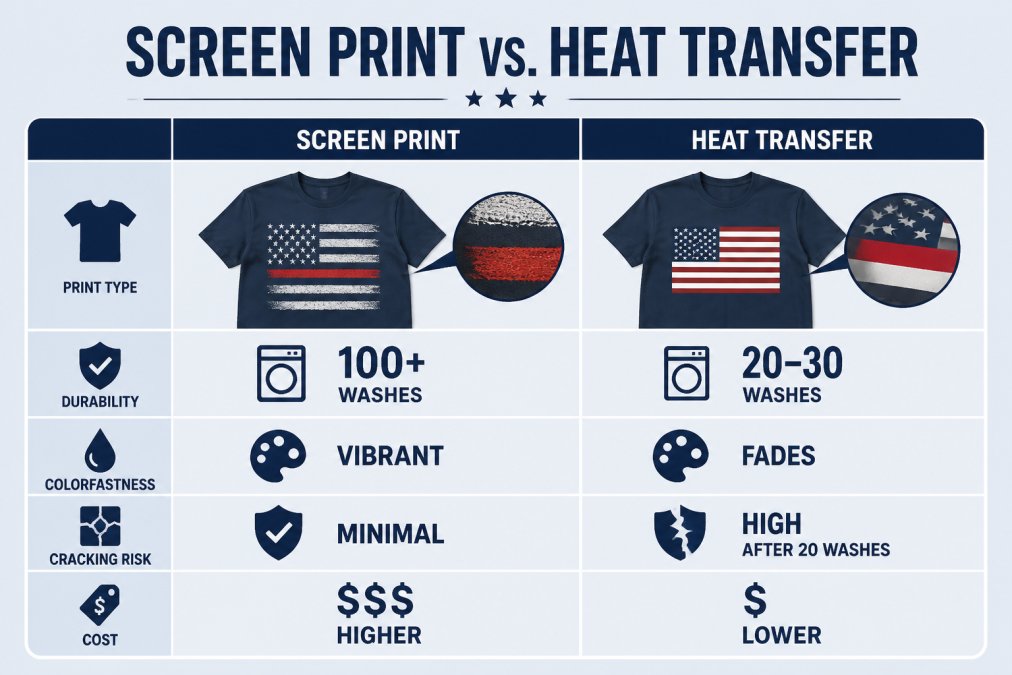
Screen printing pushes ink through a mesh screen so it bonds with the fibers. Because the ink is embedded rather than sitting on top, a quality screen print still looks good after hundreds of washes.
Heat transfer presses a pre-made design onto the shirt with a surface-level bond. It's cheaper and faster, but the print cracks after 20-30 washes and peels off by 50.
Direct-to-garment (DTG) printing sprays ink onto the fabric for detailed, colorful prints, but durability depends on ink quality and pre-treatment.
Quick comparison:
- Screen print: lasts 100+ washes, costs more, best for bold graphics
- Heat transfer: lasts 20-30 washes, costs less, design peels over time
- Direct-to-garment: lasts 50-75 washes, good for detailed designs, quality varies
Identifying Print Quality and Colorfastness
You can assess print quality in seconds with these field tests:
The feel test. A quality screen print feels flat and smooth; heat transfer prints feel raised and plasticky with a distinct edge.
The stretch test. Gently stretch the fabric under the print. A quality screen print stretches without cracking; heat transfer cracks or peels at the edges.
The rub test. Rub the print gently. A quality screen print doesn't rub off; heat transfer may leave residue.
The edge inspection. Look at the edges of the graphic. A quality print has clean edges with no fraying or bleeding.
Colorfastness check. Hold the shirt to light. Colors should be vibrant and even, with no dull spots or bleeding into white areas.
Wash Durability: What to Expect and How to Test
Print durability is best judged by wash testing, but you can't wash a shirt before you buy it. Instead, look for these indicators:
- Cracking: After 20-30 washes, heat transfer prints typically develop fine cracks along the design edges. Screen prints should show no cracking.
- Fading: Color loss is common in low-quality prints. A quality screen print retains its color for 50+ washes.
- Peeling: Heat transfer prints often peel at the corners first. If you see any lifting at the edges when new, it will only get worse.
At-home wash test: If you're unsure about a shirt you already own, wash it inside out in cold water and air dry. Inspect the print after each wash. Note any changes in texture, color, or edges. A quality print will look nearly identical after 10 washes; a poor one will show visible wear.
Fit and Sizing: Getting the Right Patriotic Tee
A quality shirt is worthless if it doesn't fit. Bad fit makes you uncomfortable and makes you avoid wearing it. But fit isn't just about size, it's about how the fabric behaves after washing, how the neckline holds up, and how the cut flatters your body.
Understanding Fit Types and Cuts
Patriotic apparel comes in different fits. Slim fits hug your body. Regular fits have room without being baggy. Relaxed fits are loose and comfortable.
Try on the shirt.
You should fit two fingers between the fabric and your body. The shirt should follow your shape without clinging, tightness, or sloppiness.
Patriotic graphics should sit centered on the chest or back. Off-center graphics look cheap and poorly made.
Shrinkage and Neckline Recovery
Cotton shirts can shrink up to 5-7% after the first wash unless pre-shrunk. Ring-spun cotton shrinks less than standard cotton, and polyester blends resist shrinking best.
How to check for shrinkage: Look at the tag for "pre-shrunk" or "preshrunk." If it's not listed, assume the shirt will shrink.
Test neckline recovery by gently pulling and releasing it. A quality neckline snaps back quickly; one that stays stretched will sag after a few wears.
Double-stitched or reinforced necklines hold their shape through washing. Single-stitched necklines stretch and warp.
Sizing Charts and Online Buying
When buying online, always check the sizing chart. Measure a shirt you already own that fits well and compare it to the chart. Pay attention to chest width and body length, not just the size label. Sizes vary between brands, so a medium in one brand may fit like a small in another.
How to Wash Graphic Tees to Preserve Print and Fabric
Washing destroys most patriotic graphic tees. The print cracks. The fabric fades. The seams stretch.
Proper washing extends the life of your shirt by years.
Washing and Drying Best Practices
Turn the shirt inside out before washing to protect the print from friction.
Use cold water. Hot water fades colors and weakens fibers; cold cleans just as well.
Wash with similar colors. Don't wash red, white, and blue patriotic shirts with dark colors.
Use a small amount of mild detergent; heavy detergents break down fabric and fade colors.
Wash on a gentle cycle. Aggressive washing damages seams and prints.
Air dry in the shade whenever possible.
If you must use a dryer, use the lowest heat setting.
Washing checklist:
- Turn inside out
- Use cold water
- Wash with similar colors
- Use mild detergent
- Gentle or hand-wash cycle
- Air dry in shade
Long-Term Care to Maintain Color Vibrancy
Store patriotic apparel in a cool, dry place. Heat and humidity fade colors and promote mildew.
Fold shirts flat. Hanging stretches the neckline and shoulders over time.
Keep shirts away from direct sunlight. UV rays fade colors, especially reds and blues.
Don't iron over the print; use low heat on the back only if needed.
Repair small holes or loose seams immediately before they grow.
Wash less often. Every wash stresses fabric and print, so spot-clean small stains instead.
Common Mistakes When Buying Patriotic Graphic Tees
Most people make the same mistakes. They buy cheap. They ignore the fabric.
Mistake 2: Ignoring the fabric weight. Thin fabric wears out fast.
Mistake 3: Not checking seam quality. Loose seams unravel. Inspect before you buy.
Mistake 6: Washing in hot water. This is the fastest way to destroy a patriotic shirt.
Mistake 7: Machine drying. The dryer damages both fabric and print. Air dry whenever possible.
Buying quality patriotic apparel means investing in something that lasts.
At Bargainoutlet.store, we focus on quality without the high price tag.
Frequently Asked Questions
How can you tell if a graphic tee is good quality?
Check three things: fabric weight (quality tees feel substantial, not thin or flimsy), seam construction (straight stitching, reinforced collar and armholes), and print application. Screen-printed graphics should feel raised but not stiff; heat-transfer prints should lay flat without cracking. Run your fingers along seams, loose threads or uneven stitching signal poor construction. High-quality patriotic graphic tees maintain color vibrancy through multiple washes and don't show fading or cracking within the first season of regular wear.
What fabric is best for a comfortable patriotic T-shirt?
Ring-spun cotton or cotton-blend fabrics offer the best balance of comfort and durability. Ring-spun cotton is softer and stronger than standard cotton because the fibers are twisted tighter during production. Look for fabric weight between 5.3 and 6.0 ounces per square yard, this range provides breathability without feeling thin or transparent. Blends with 5-10% polyester add stretch and help the shirt hold its shape through repeated washing, which is especially important for graphic tees that see frequent wear.
How do you wash a graphic tee without fading the print?
Turn the shirt inside out before washing to protect the graphic from friction and detergent. Use cold water and a gentle cycle with mild detergent, avoid bleach and fabric softeners, which break down print adhesive and fade colors. Wash with similar colors only. Air dry flat or hang-dry whenever possible; machine drying generates heat that can crack or fade screen-printed graphics. If you must use a dryer, use the lowest heat setting. Following these steps preserves both the print quality and the fabric's color vibrancy for years of everyday wear.
What should you check in the seams and stitching of a T-shirt?
Examine the shoulder seams, armholes, and neckline for straight, even stitching with no loose threads or gaps. Quality tees have reinforced seams at stress points like the collar and sleeve attachments, which prevents unraveling after multiple washes. Check that the stitching color matches the fabric, mismatched thread suggests rushed production. Run your finger along the inside seams; they should feel smooth and secure. Poor stitching is one of the first signs a shirt will fall apart quickly, so this inspection is critical for determining if a patriotic graphic tee will actually last.