
Table of Contents
- Start with a Fabric and Garment Quality Checklist
- How to Look Expensive on a Budget: 5 Practical Steps
- How to Make an Outfit Look More Expensive with Fit and Tailoring
- How to Style Basic Clothes: Proportions, Monochrome, and Accessories
- How to Care for Clothes So They Look New
- Cost-Per-Wear: The Real Math Behind Expensive-Looking Clothes
- Conclusion: Small Changes, Big Visual Impact
- Frequently Asked Questions
Last Updated: October 19, 2026
Start with a Fabric and Garment Quality Checklist
You can learn how to make cheap clothes look expensive before you ever walk into a store. The trick starts at the rack, not the mirror.
Here at Bargainoutlet.store, we have watched too many shoppers grab a bargain and then wonder why it looks flat after one wash. The difference usually comes down to two things you can check in under a minute: the fabric and the construction.
Check the Label: 100% Cotton and Natural Fibers
Natural fibers drape better and hold their shape. Look for 100% cotton, linen, or wool blends. Skip anything that feels slick and plasticky. Polyester can work, but it tends to shine under light, and shine reads as cheap.
Run your hand over the fabric. If it feels thin enough to see through, put it back. A denser weave looks richer and lasts longer.
Inspect Stitches, Seams, and Buttons
Turn the garment inside out. Small details give it away:
- Stitches should be tight and even, with no loose threads
- Seams should lie flat, not pucker or pull
- Buttons should feel solid, not flimsy or glued on
- Patterns should line up at the seams
A common mistake is skipping this step because the price tag is low. A loose seam will cost you more in the long run than the shirt itself.
How to Look Expensive on a Budget: 5 Practical Steps
The fastest path to a premium appearance is a simple routine, not a bigger budget. These five steps work on any wardrobe.
- Shop the fabric first. Check labels before you check the mirror.
- Buy fewer, better pieces. Three solid basics beat ten flimsy ones.
- Get the fit right. A hem or a nip at the waist changes everything.
- Stick to a tight color palette. Two or three colors that all match.
- Care for what you own. Fresh, wrinkle-free clothes look new.
Most guides rush to styling tricks. But here's what they miss: a wrinkled, ill-fitting shirt cannot be styled into looking expensive. Fix the base first.
How to Make an Outfit Look More Expensive with Fit and Tailoring
Fit is the single biggest lever you control. A well-fitted inexpensive shirt beats a baggy designer one every time. The good news is that most fit problems are fixable for far less than a new garment.
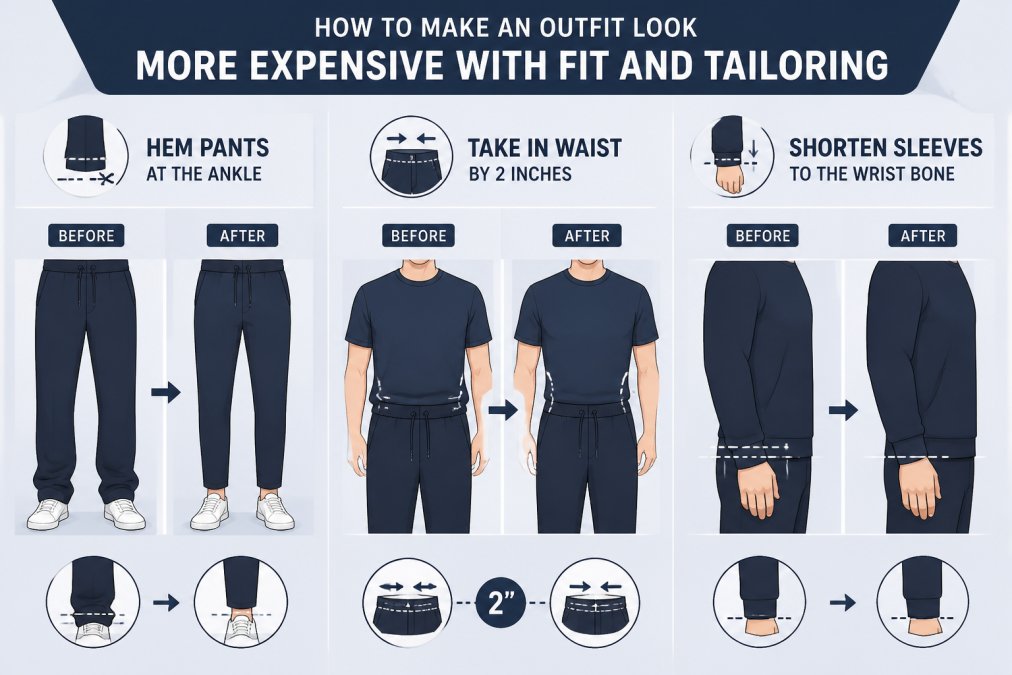
Check three things in the mirror. Shoulder seams should sit at the edge of your shoulder. Sleeves should end at the wrist bone. Pants should break just once at the shoe, or not at all.
Rank Alterations by Visual Impact
Not every fix is worth the money. Rank them by how much they change the silhouette:
- Hem pants. The highest-impact, lowest-cost fix. Crooked or pooling hems make even good trousers look sloppy.
- Take in a waist. Removes bulk from the back and sides and turns a boxy shirt or dress into a shaped one.
- Shorten sleeves. A jacket sleeve that ends at the wrist bone reads as custom; one that swallows the hand reads as borrowed.
- Taper legs. Slims a straight-leg cut into something more modern without buying new pants.
- Shorten a hemline. A dress or skirt that hits the right point on the leg looks intentional at any price.
What Alterations Actually Cost
Prices vary by shop and region, so call ahead for a quote. As a working rule, most basic alterations, a pant hem, a sleeve shorten, a simple waist take-in, land in the low-to-mid double digits per garment at a neighborhood tailor, while more involved work like tapering or lining adjustments runs higher. A good rule: if the alteration costs more than the garment, skip it. The exception is a piece you will wear dozens of times, where the cost-per-wear math still works in your favor.
What You Can Fix at Home
You do not need a tailor for everything. These fixes are beginner-friendly with a basic sewing kit or even an iron:
- Hem pants with iron-on tape for a temporary fix, good for a single event, not for repeated washing.
- Take in a waist with a few hand stitches at the back seam on a simple shirt or skirt.
- Shorten sleeves by cuffing a knit or rolling a jacket sleeve once for a casual look.
- Fix a gaping button placket by moving a button a half inch, or adding a hidden snap.
When a Tailor Is Worth It
Hire a tailor when the fix requires opening seams, reshaping a shoulder, or working with lined or structured fabric. Those jobs need a machine and experience. For everything else, hems, simple take-ins, button moves, a home fix is often enough to get the visual payoff.
How to Style Basic Clothes: Proportions, Monochrome, and Accessories
Styling is where basic clothes start to look expensive. The goal is simple: create one clean line from head to toe.
Monochrome is the easiest win. Wear one color family top to bottom. Navy on navy, cream on cream, black on black.
Proportion comes next. Pair a loose top with a fitted bottom, or the reverse. Two loose pieces swallow you. Two tight pieces look strained.
Accessories add polish. A good belt, a simple watch, and clean leather shoes do more than a pile of jewelry.
Build Polished Outfits from Affordable Pieces
Here is a formula you can reuse all week:
- A fitted tee or knit in a neutral color
- Straight or tapered pants that hit the right length
- One structured layer, like a blazer or a clean jacket
- Leather shoes that are polished, not scuffed
- One metallic detail, like a watch or a simple chain
Swap the layer and the shoes, and you have a new outfit from the same base.
How to Care for Clothes So They Look New
Care is the step nobody talks about, and it is where cheap clothes fall apart fastest. Treat your clothes well and they keep that fresh, put-together look for years. The goal is simple: slow down the wear that makes fabric pill, fade, and lose shape.
Wash to Preserve Fabric
Start with the wash. Turn garments inside out, use cold water, and skip the dryer when you can. Heat breaks down fibers and fades color. A few habits make the biggest difference:
- Wash less often. Most knits and denim do not need a wash after every wear. Air them out between wears.
- Use a mesh laundry bag for knits and anything with stretch, so the drum does not pull them out of shape.
- Zip zippers and button buttons before washing to stop them snagging other pieces.
- Skip fabric softener on stretch fabrics, it coats fibers and reduces recovery.
Dry Without Heat
Heat is the enemy of a polished look. Line-dry or flat-dry knits to keep their shape, and hang structured pieces on a hanger to dry so they hold their line. If you must use a dryer, choose the lowest heat setting and pull items out slightly damp.
De-Pill and De-Fuzz
Pilling is the fastest way a cheap garment starts to look cheap. A fabric shaver or a fine-tooth comb removes pills from sweaters, leggings, and sofa-adjacent knits in minutes. Work in one direction, gently, and stop before you thin the fabric. Do this once a month on high-wear pieces.
Remove Stains Before They Set
Blot, do not rub, and treat stains while they are fresh. Cold water and a drop of dish soap handle most food and oil marks on cotton and blends. For oil stains, work a small amount of dish soap into the fabric, let it sit a few minutes, then wash as normal. For deodorant buildup on dark shirts, a paste of baking soda and water lifted off with a soft brush restores the color.
Store to Hold Shape
Crammed closets crease clothes and stretch shoulders on hangers. Give garments room to breathe, use sturdy hangers for structured pieces, and fold knits rather than hanging them so they do not stretch at the shoulder. Store off-season pieces clean and dry, and keep cedar or a sachet nearby to deter pests.
Cost-Per-Wear: The Real Math Behind Expensive-Looking Clothes
Cost-per-wear is the price of a garment divided by how many times you wear it. A shirt you wear fifty times costs far less per wear than a trend piece you wear twice.
This is the math that makes budget style work. A cheap item that falls apart in a month is expensive. A slightly better item you wear for years is the real bargain.
Before you buy, ask one question: will I wear this at least thirty times? If the answer is no, leave it on the rack.
Conclusion: Small Changes, Big Visual Impact
Looking expensive is a skill, not a budget line. Check the fabric, fix the fit, keep the palette tight, and care for what you own. Those four habits do most of the work.
At Bargainoutlet.store, we built our shop for exactly this kind of shopper. Our graphic tees, hoodies, and activewear are made for people who want quality without the high price tag.
As a veteran-owned brand, we care about what we sell and who we sell it to. Shop now and build a wardrobe that looks the part.
Frequently Asked Questions
How can I make cheap clothes look expensive without spending much?
Focus on fit, fabric, and care before buying more. Check labels for 100% cotton or natural fibers, look for even stitches and secure buttons, and budget for simple alterations like hemming or taking in a waist. Steam instead of ironing to remove wrinkles, and use monochrome outfits to create a clean line. These steps cost little but change how an outfit reads. For graphic tees and hoodies, choose heavier fabrics and structured cuts that hold their shape after washing.
Can tailoring make affordable clothes look expensive?
Yes. A $10 to $20 hem or a quick waist adjustment can transform how a garment sits on your body. Tailoring fixes the most visible issue with cheap clothes: excess fabric and poor drape. Ask for a simple hem, sleeve shortening, or button reinforcement. Keep alterations proportional to the garment's value, and always try the piece on before sewing. A well-fitted inexpensive shirt looks more polished than a loose designer one.
Which colors make an outfit look expensive?
Monochrome combinations in neutral tones (black, navy, gray, cream, olive) create a clean, cohesive look that reads as premium. Matching your belt, shoes, and bag in a similar tone adds visual impact without extra spending. Avoid high-contrast neon or overly busy prints when you want a polished appearance. A single metallic detail, like gold buttons or silver hardware, can lift a basic outfit.
How do I keep inexpensive clothes looking new after washing?
Turn garments inside out, wash in cold water on a gentle cycle, and air-dry when possible. Use a fabric steamer instead of a hot iron to remove wrinkles without crushing fibers. Store folded knits flat and hang structured pieces on wide hangers. Treat stains quickly and avoid overdrying. These habits reduce pilling, fading, and stretched seams, which are the main reasons budget clothes start to look worn.
Ready to upgrade your basics? Browse our latest graphic tees and hoodies at Bargainoutlet.store and see how far a good fit can take you.